Case Study

Overview
The Medical Reference App was conceptualized for a premier medical publisher to transform functionally inert physical books and linear digital files into a dynamic Clinical Decision Support System (CDSS). The core objective was to empower healthcare professionals with instantaneous, offline access to life-saving clinical guidelines, intuitive study tools, and AI-driven summaries.
Problem Statement
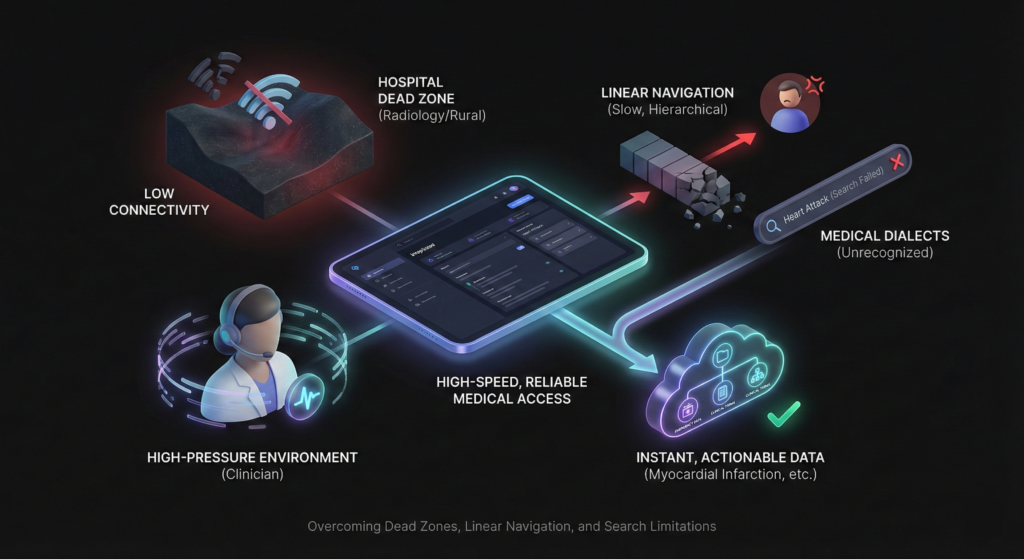
Medical professionals operate in high-speed, high-pressure environments, often within hospital “dead zones” (such as radiology suites or rural clinics) where internet connectivity is unreliable or nonexistent. Traditional digital reference tools suffered from linear navigation, making it impossible to quickly retrieve dense, hierarchical medical data during emergencies. Furthermore, standard search interfaces lacked the sophistication to understand “medical dialects” (e.g., failing to link common terms like “heart attack” to clinical terms like “myocardial infarction”), preventing users from finding critical information efficiently.
Research & Product Strategy
Extensive user and environmental research revealed that latency, reliance on internet connectivity, and search inaccuracy were the most significant pain points for clinicians at the point of care. The product strategy was therefore centered around an “offline-first” paradigm and robust semantic architecture.
"Ship and Hydrate" Onboarding Strategy
To eliminate frustrating download wait times, the product strategy mandated that the application be fully pre-populated with reference data upon initial launch, ensuring immediate access to critical guidelines.
Hybrid AI & Local Retrieval
A localized Retrieval-Augmented Generation (RAG) strategy was mapped out. This allowed the product to retrieve relevant clinical text chunks offline and, when connectivity permitted, synthesize complex data into actionable summaries grounded strictly in trusted medical content.
Semantic Sanitization
A strategy was developed to strip noisy formatting from legacy text while meticulously preserving clinical meaning, making the data highly structured and searchable.
Design Process
The design execution focused on minimizing cognitive load and streamlining both point-of-care reference and long-term medical study workflows.
Optimized Reading & Annotation Tools
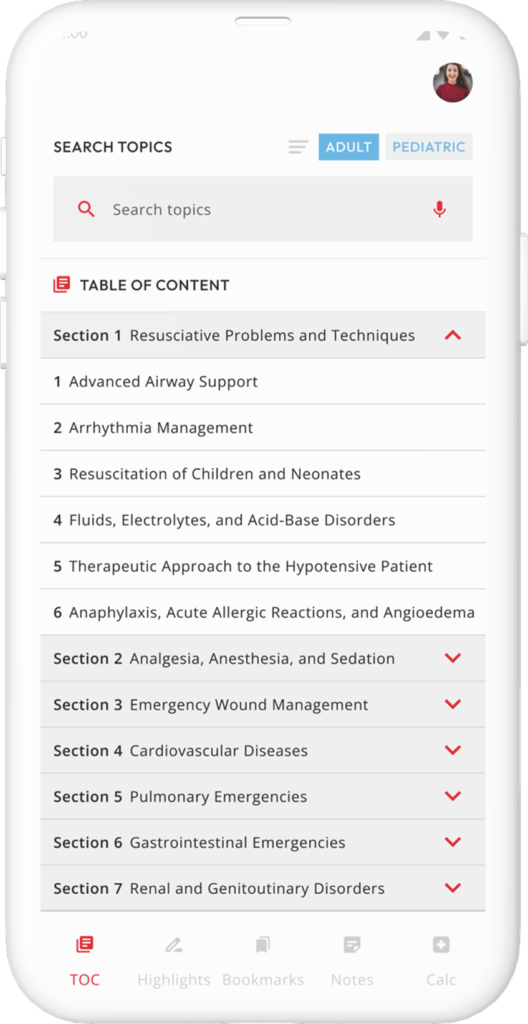
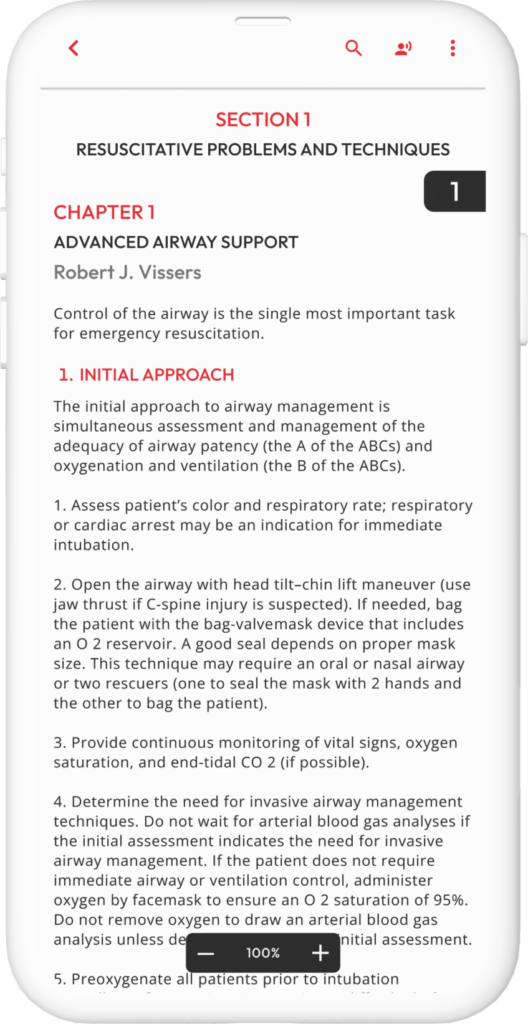
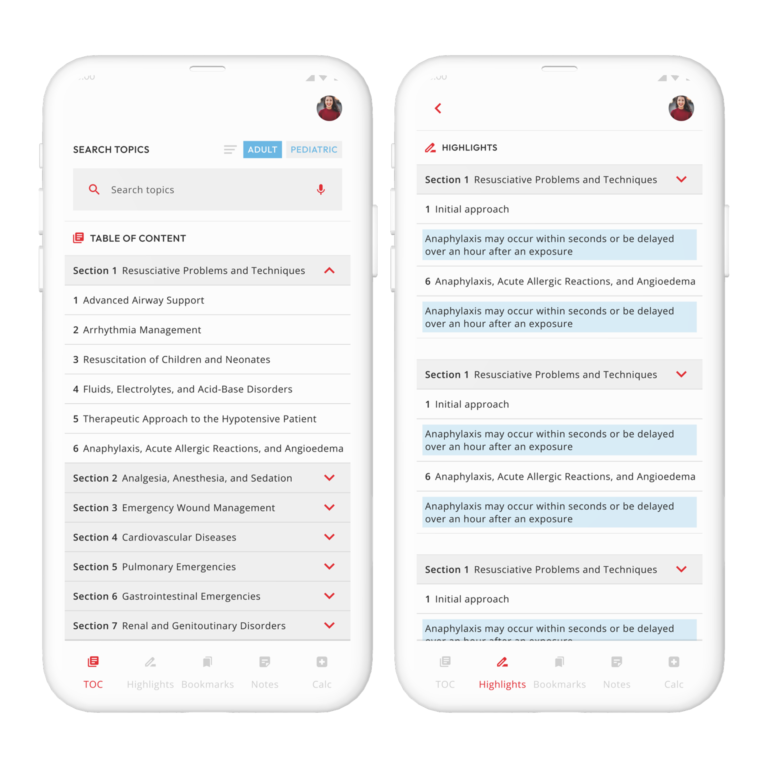
User journeys were crafted around intuitive topic selection, allowing doctors to easily read literature, highlight critical information, bookmark important sections, and take organized notes on the go.
Progressive Disclosure
To handle the immense density of medical data, the user interface was designed using progressive disclosure principles. This ensured that deep hierarchies of information were presented in an easily digestible, layered format that prioritized readability.
Search Interface Design
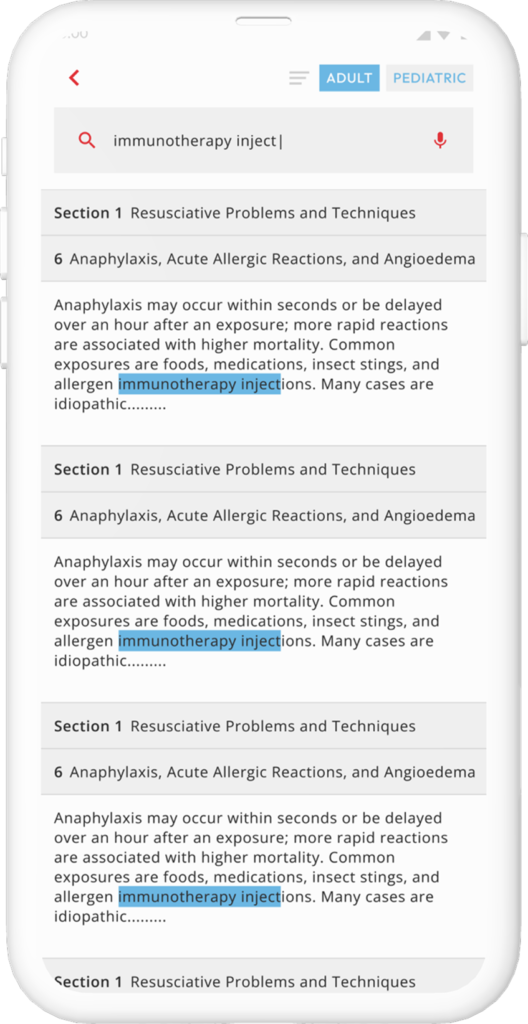
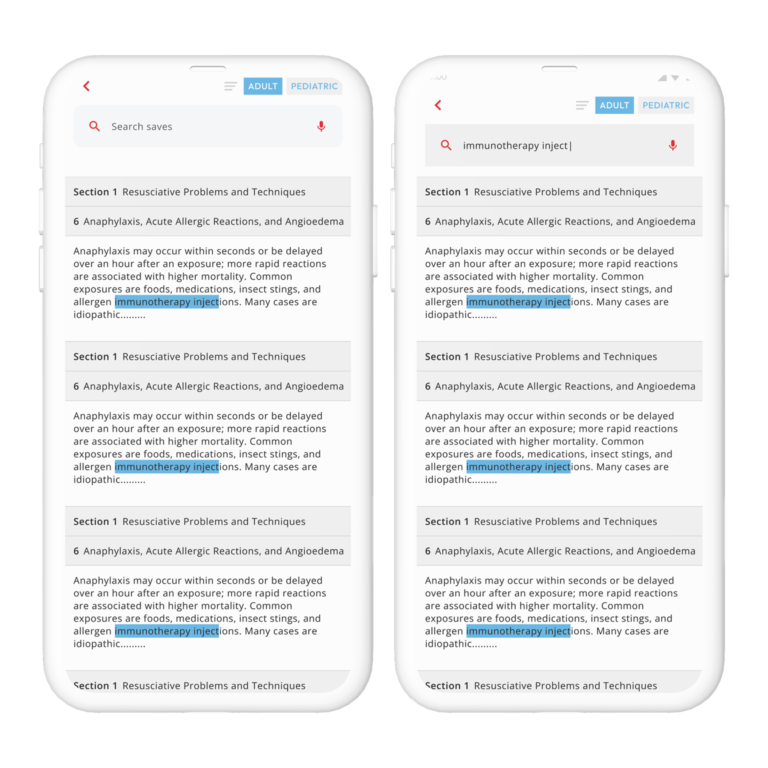
The search experience was completely redesigned to accommodate complex medical terminology. By integrating index-time synonym expansion into the UX flows, the interface gracefully handled varied query inputs without returning zero-result dead ends.
Strategic Challenges & Solutions
Challenge
Guaranteeing accurate search results and usability despite massive variations in clinical terminology and user dialects.
Solution
A comprehensive synonym-matching strategy was integrated directly into the product's core search experience. This ensured that regardless of whether a user entered a colloquial or highly technical term, the correct clinical data surfaced instantly.
Challenge
Delivering a modern, feature-rich application that functioned flawlessly without cloud dependency.
Solution
An offline-first product strategy was strictly enforced during the planning phase. Every feature, from table-of-contents navigation to localized text chunk retrieval, was designed to operate independently of external network requests, ensuring total reliability in hospital dead zones.
Outcomes & Impact
The strategic transition from static literature to an intelligent CDSS yielded transformative results for both the publisher and end-users.
Unprecedented Speed & Utility
Sub-millisecond retrieval of millions of medical entities was achieved entirely offline, guaranteeing 100% utility in any hospital environment.
Enhanced Search Recall
The semantic search strategy completely eliminated standard query failures, surfacing vital clinical guidelines with absolute precision.
Optimized Clinical Workflows
he introduction of smart annotation, intuitive topic selection, and seamless offline access significantly reduced the time required for clinicians to retrieve information, fundamentally improving point-of-care decision-making and continuous medical education.