Case Study
Fintech Wallet: Bridging Fiat and DeFi through Modular Product Design

Overview
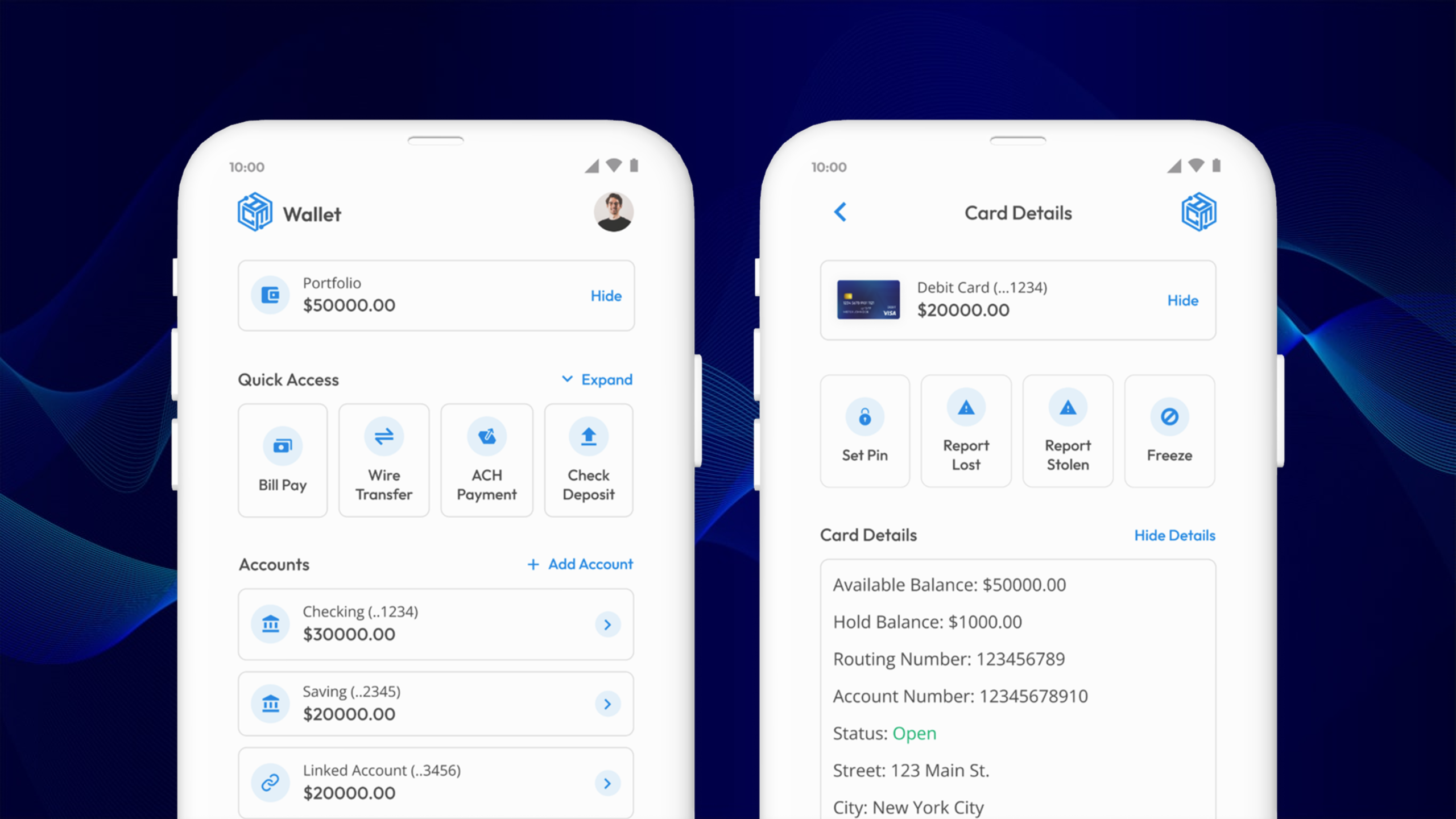
The “Wallet” project is a comprehensive white-label fintech solution created to empower businesses in the Banking-as-a-Service (BaaS) sector. The core objective was to design a unified, cross-platform product experience that merges the stability of traditional fiat banking with the agility of decentralized finance (DeFi). The focus remained on delivering a flexible, enterprise-grade product architecture that allows partners to deploy fully branded, secure financial applications rapidly.
Problem Statement
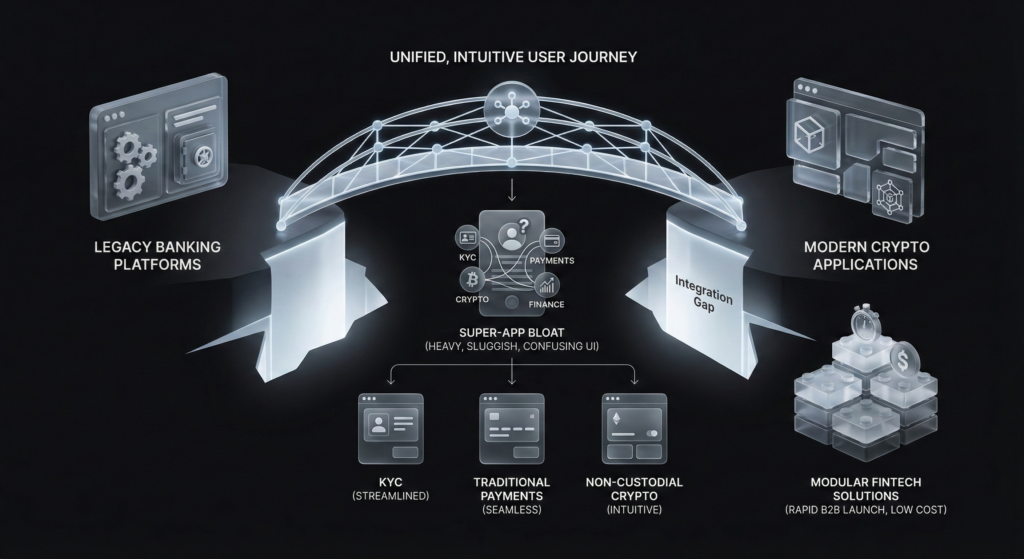
The modern financial landscape is heavily fragmented, creating a significant “Integration Gap.” Users are frequently forced to navigate disjointed experiences between legacy banking platforms and modern crypto applications. For businesses, attempting to combine these services historically resulted in “Super-App Bloat”—heavy, sluggish, and confusing user interfaces. A solution was needed to provide a unified, intuitive user journey across diverse financial services (such as KYC, traditional payments, and non-custodial crypto management) without compromising usability or increasing cognitive load. Additionally, B2B partners faced excessively long launch cycles and high costs when attempting to design custom fintech solutions from scratch.
Research & Product Strategy
Extensive market and competitor analysis revealed that disjointed user flows and lack of trust were the primary pain points in hybrid financial applications. The product strategy was therefore centered around a “modular ecosystem” approach.
Feature Prioritization
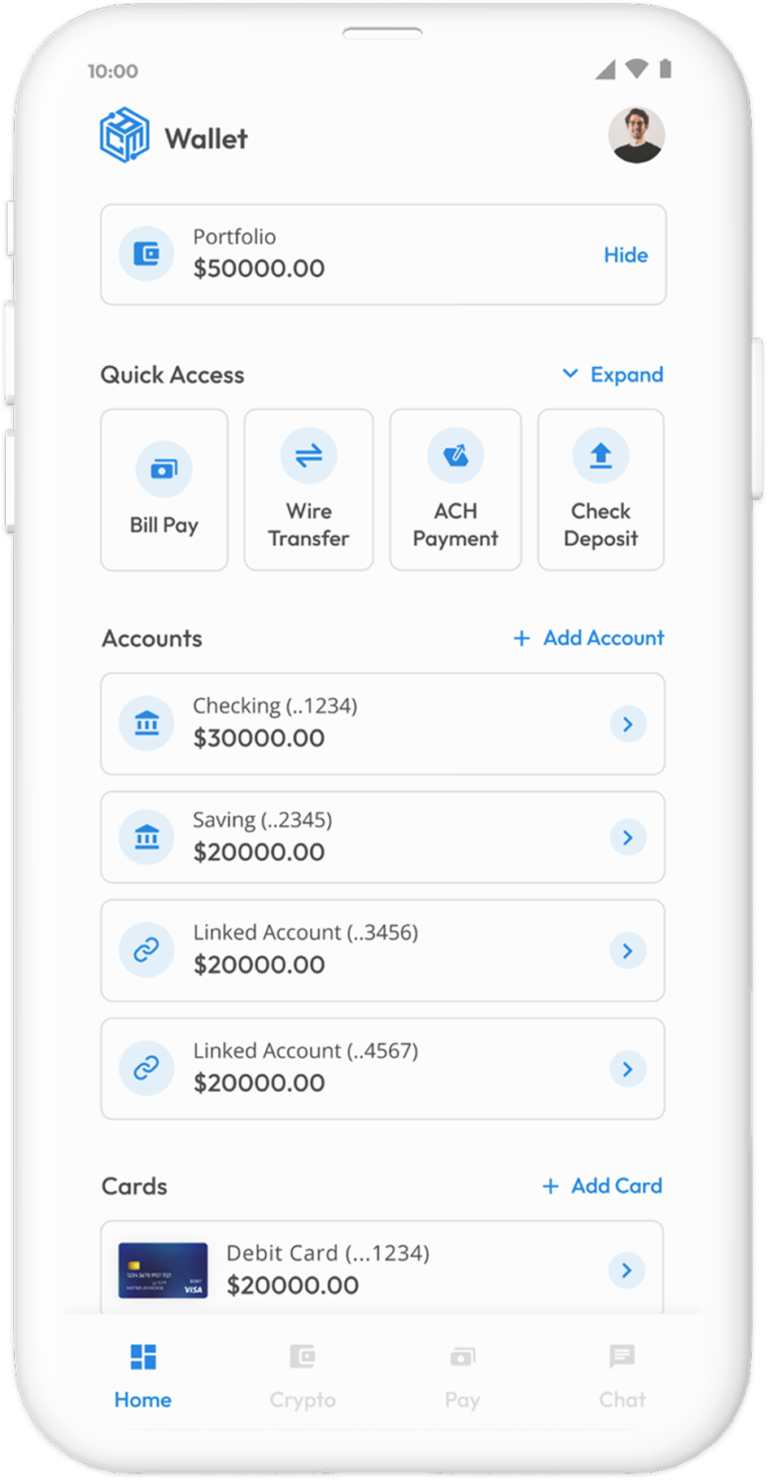
Core banking functionalities (account transfers, checking, debit management) were mapped alongside advanced features (non-custodial crypto wallets, AI-based fraud detection) to ensure a comprehensive yet uncluttered offering.
B2B2C White-Label Strategy
The product was conceptualized not as a single app, but as a robust framework. The strategy prioritized creating pre-built, extensively tested user journeys that businesses could easily adopt and customize.
Compliance by Design
User flows were explicitly planned to seamlessly integrate mandatory regulatory steps (such as KYC and multi-factor authentication) without interrupting the onboarding experience.
Design Process
The design execution focused on accessibility, performance perception, and extensive customization.
Custom Theme Builder
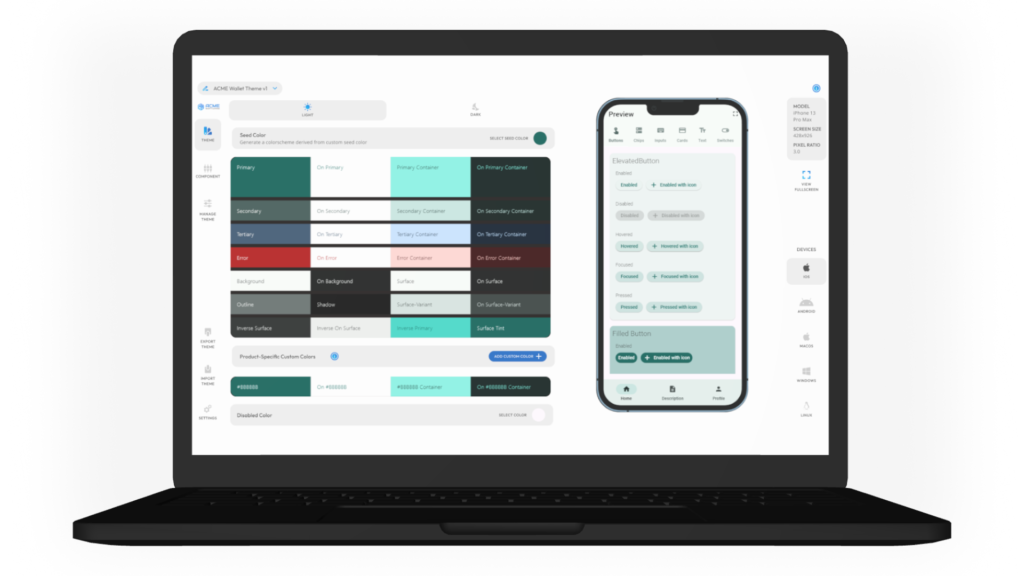
A dynamic design system was developed, allowing 100% of the UI to be customized to match a partner’s brand using standard design assets. This ensured that while the underlying user experience remained optimized, the visual identity could be radically transformed.
Unified Information Architecture
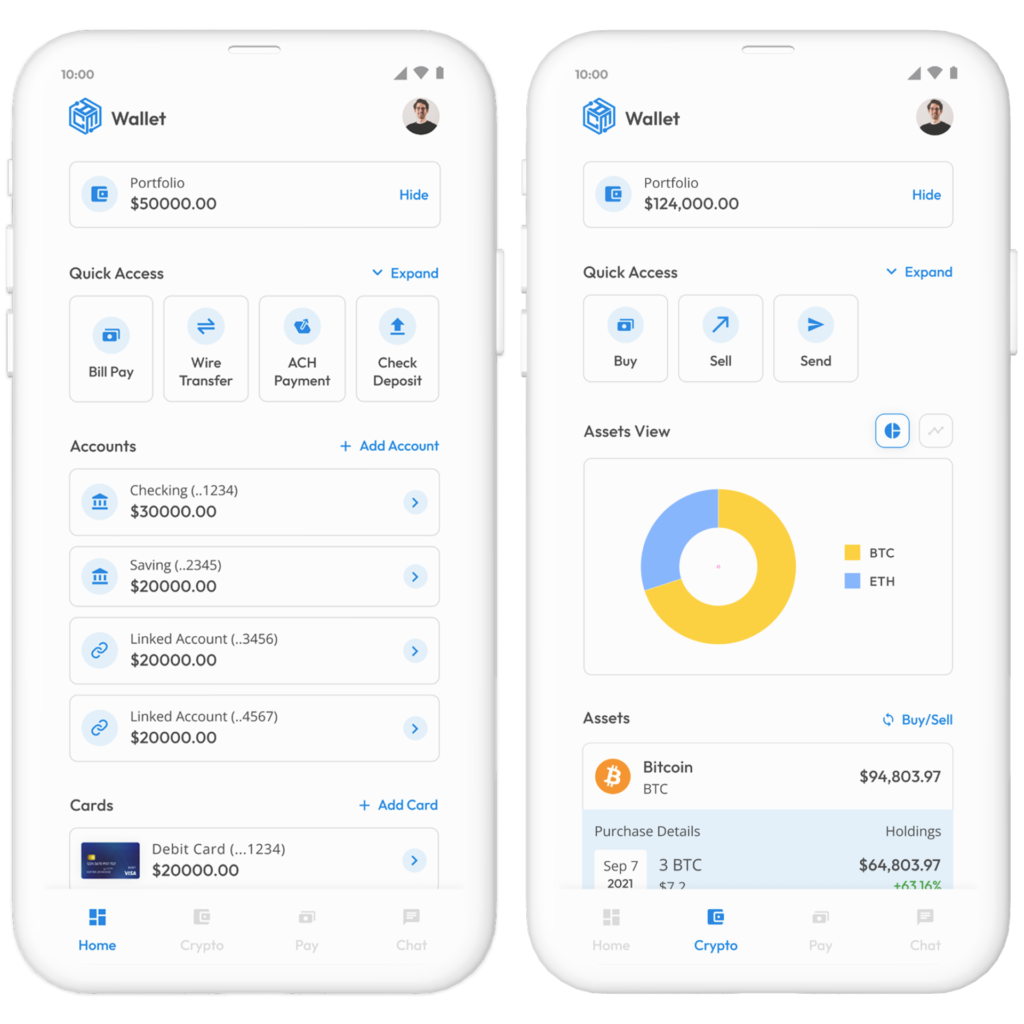
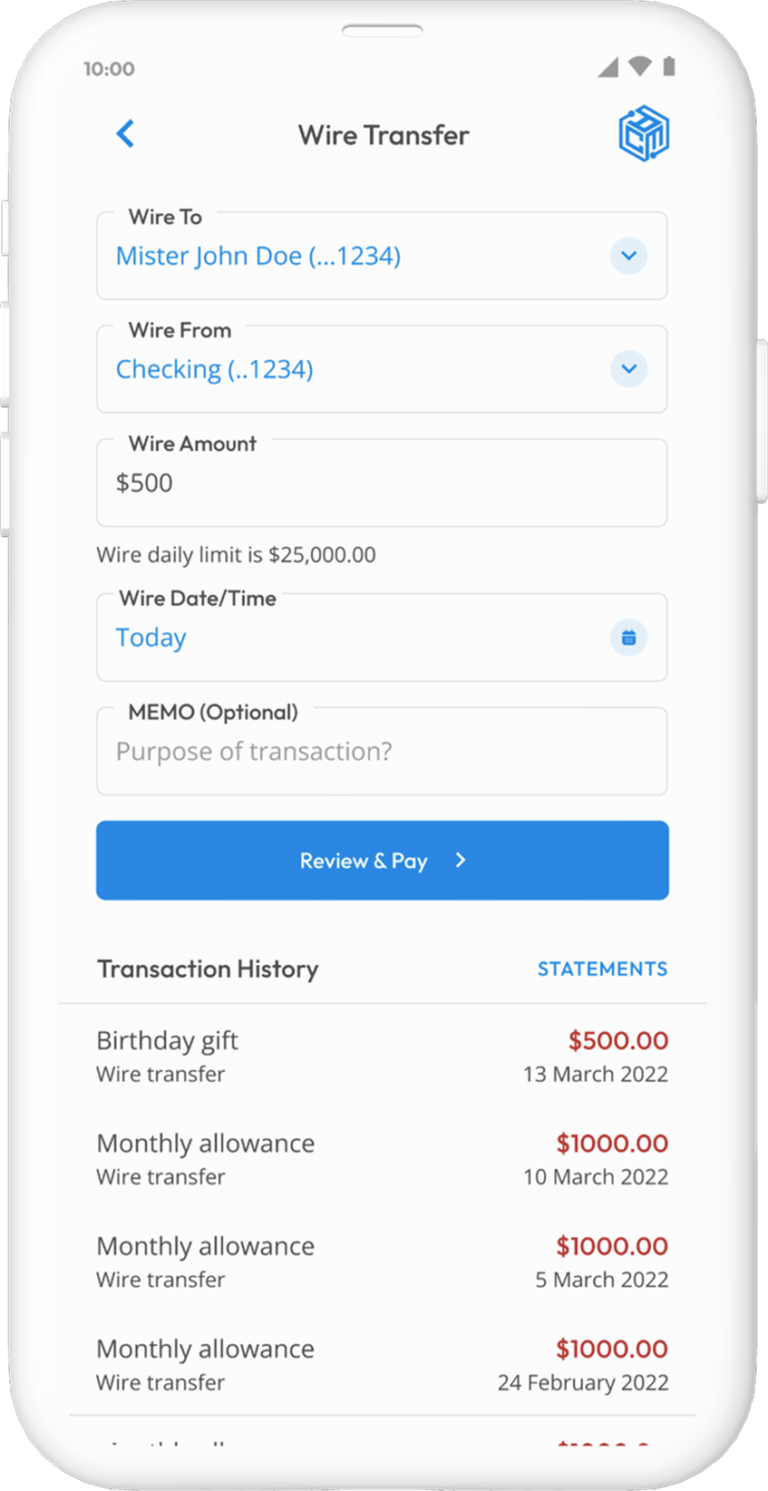
Complex transaction flows, spanning traditional fiat rails and external blockchains, were synthesized into a single, cohesive interface. Clear visual hierarchy was established to help users easily differentiate between fiat and crypto balances, transfer types, and security settings.

Usability Testing & Iteration
Every component and user flow underwent rigorous usability testing to eliminate subjective design debates. This ensured that the transition between varying financial operations felt natural, maintaining a high level of user trust and satisfaction.
Strategic Challenges & Solutions
Challenge
Balancing complex hybrid transactions (Fiat-to-Crypto) with an intuitive user interface.
Solution
The user journey was designed with a state-machine approach, providing clear, step-by-step visibility into transaction statuses. In cases of failure, the interface was designed to communicate alternative actions clearly, preserving transparency and trust.
Challenge
Accommodating diverse B2B brand requirements without breaking the core user experience.
Solution
A strict separation of visual styling from interaction design was enforced. By isolating the foundational UX structures from the visual layer, partners could inject distinct color palettes, typography, and iconography into the Custom Theme Builder without risking usability degradation.
Outcomes & Impact
The strategic planning and user-centered design of the Wallet framework yielded significant business and user benefits:
Accelerated Time-to-Market
The modular product design reduced the time required for B2B partners to launch branded applications from several months to just a few weeks.
Enhanced UX Consistency
By standardizing the design system and prioritizing pre-tested user flows, the product delivered a premium, frictionless experience across all platforms (iOS, Android, Web, and Desktop).
Cost Efficiency
The strategic consolidation of design assets and interaction models eliminated the need for continuous, costly design iterations, proving the immense value of a strong, centralized product strategy.