Case Study

Overview
The “Inmate Tracker” was conceptualized to streamline operations for a major provider of correctional software. The core objective was to replace a failing, web-dependent Jail Management System (JMS) with a resilient, mobile-first product. The focus remained entirely on enhancing facility security, improving officer efficiency, and ensuring the legal compliance of inmate wellness checks through strategic product planning and ruggedized hardware integration.
Problem Statement
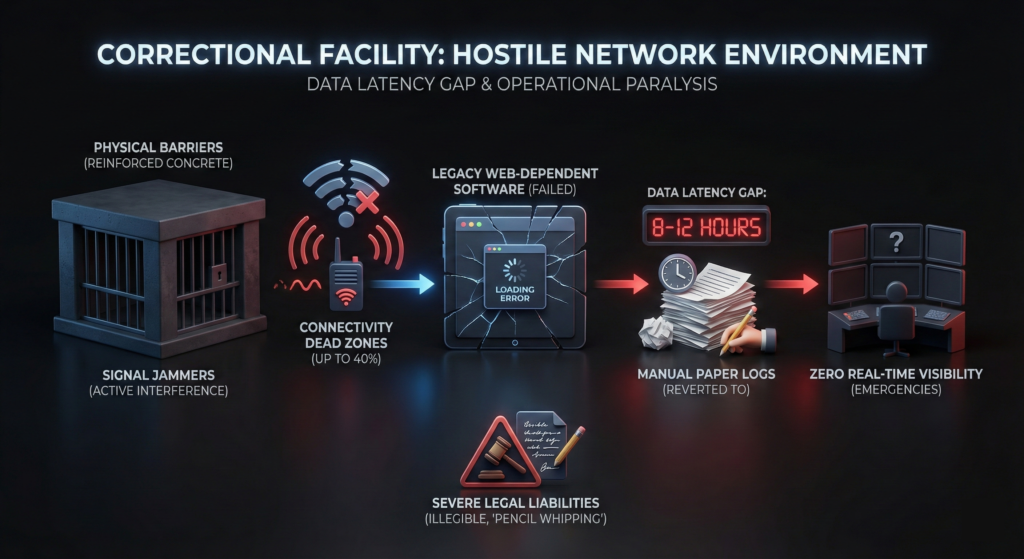
Correctional facilities present “hostile network environments.” Physical barriers like reinforced concrete and the active use of signal jammers create massive connectivity dead zones, covering up to 40% of a facility. Relying on legacy, web-dependent software in these environments resulted in operational paralysis. When software failed in dead zones, officers reverted to manual paper logs, creating an 8-to-12-hour “Data Latency Gap.” This delay left command staff with zero real-time visibility during emergencies. Furthermore, paper logs introduced severe legal liabilities due to illegible handwriting and the practice of “pencil whipping” (falsifying observation checks).
Research & Product Strategy
Extensive environmental research dictated that continuous network connectivity could never be guaranteed. Therefore, an “Evolutionary Modernization” strategy was adopted. Instead of attempting to overhaul the massive legacy backend, the product strategy focused entirely on empowering the mobile edge.
Offline-First Paradigm
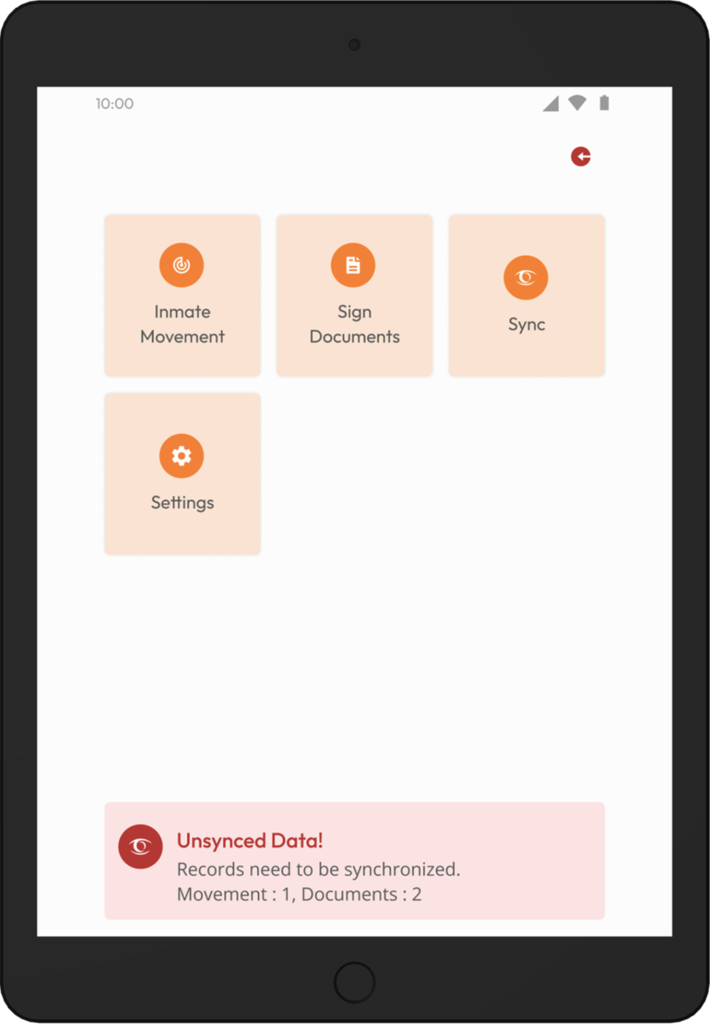
The product was designed to assume it is offline by default. A local command-queue strategy was established so officers could log movements continuously without network interruptions.
Hardware Integration Strategy
Standard tablet cameras proved too slow (3-5 seconds per scan) for mass inmate movements. The strategy shifted to utilizing specialized, ruggedized hardware with dedicated laser imagers to facilitate rapid data capture through scratched surfaces and low-light conditions.
Compliance & Legal Strategy
To mitigate litigation risks, a strict compliance framework was integrated into the product requirements. This included vector-based signature capture (recording stroke pressure and velocity) to meet ESIGN Act and DOJ audit standards.
Design Process
Designing for high-stress, high-stakes environments required an acute focus on reducing cognitive load and accelerating physical workflows.
Optimistic UI
The user interface was mapped to update instantly upon user interaction. By eliminating “loading spinners” and error dialogues related to connectivity, the design ensured that officers never had to pause their physical duties to wait for software validation.
Workflow Optimization for "Burst" Actions
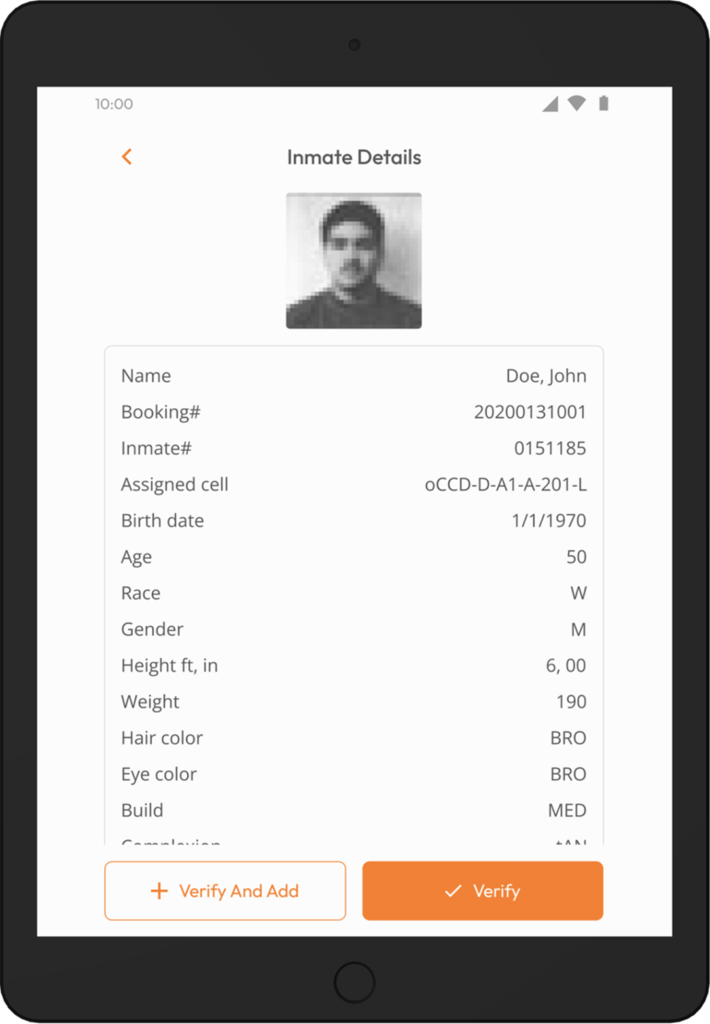
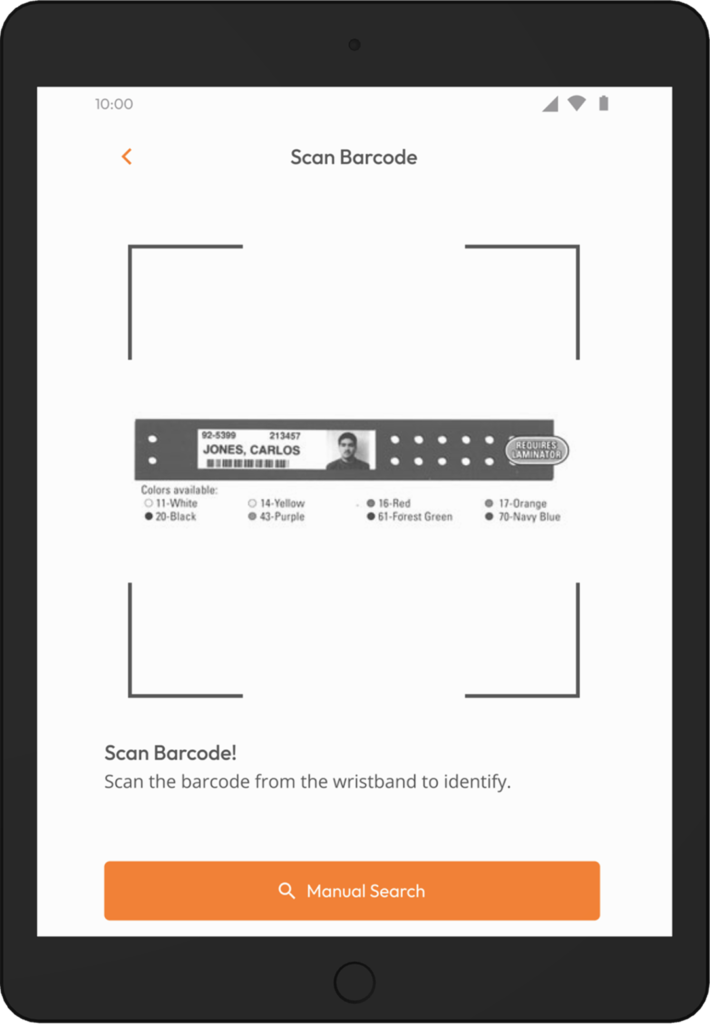
User journeys were tailored for speed. The interaction design prioritized “burst mode” scanning, allowing officers to rapidly process large groups of inmates seamlessly without navigating through multiple screens.
Automated Accountability
To solve the issue of falsified logs, a “Proof of Presence” design pattern was integrated. The UI strictly required physical location scans or wristband interactions before a wellness check could be successfully logged, forcing physical compliance through interface constraints.
Strategic Challenges & Solutions
Challenge
Maintaining accurate tracking records in complete offline isolation.
Solution
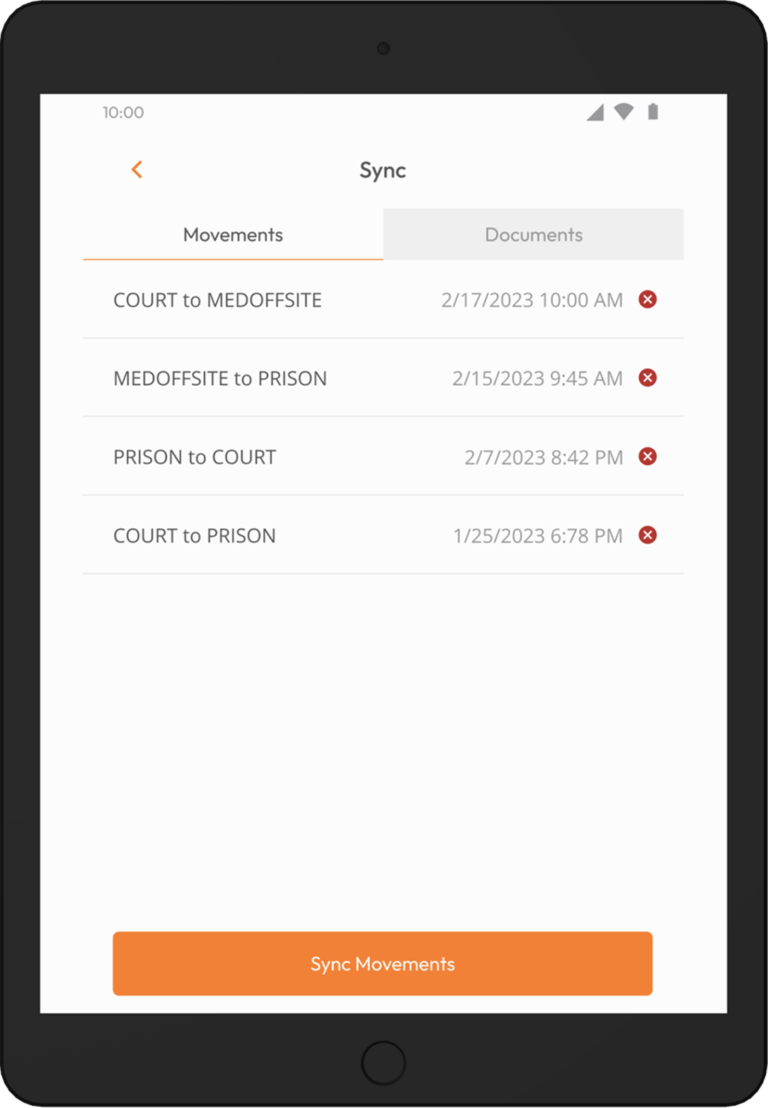
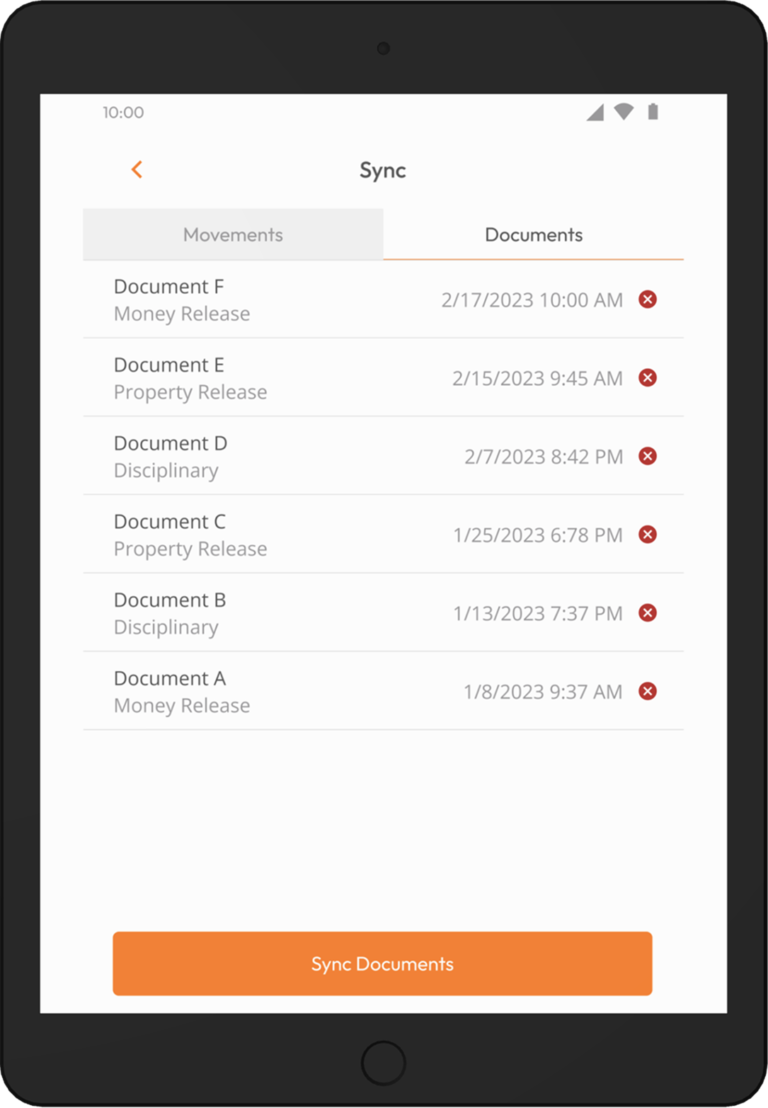
A background synchronization strategy was designed to decouple data entry from data transmission. The interface collected timestamped movements locally and utilized a "Last-Write-Wins" logic to automatically resolve conflicts once the device re-entered a connected zone, requiring zero manual intervention from the user.
Challenge
Guaranteeing the authenticity of offline wellness checks.
Solution
Monotonic clock logic and hardware-based timestamps were mandated in the product requirements. This ensured that even if a device was entirely offline, the recorded time of an observation or signature could not be retroactively altered or spoofed.
Outcomes & Impact
By shifting the “source of truth” to the mobile edge and designing for the physical realities of a prison environment, the product strategy delivered life-saving operational improvements.
99% Reduction in Data Latency
The "time-to-visibility" for inmate movements dropped from 8–12 hours to under 30 seconds, providing command staff with near real-time situational awareness.
60% Faster Headcounts
The optimized hardware design and rapid-scan workflows allowed officers to clear large inmate pods in minutes rather than an hour, significantly freeing up staff for core security duties.
100% Audit Compliance
The strategic enforcement of "Proof of Presence" scans and cryptographic signature capturing entirely eliminated falsified logs in pilot facilities, drastically reducing legal liability.